From Classroom to Startup
Posted on : 14 April, 2026 4:06 pm
Unleashing Entrepreneurial Dreams in the USA
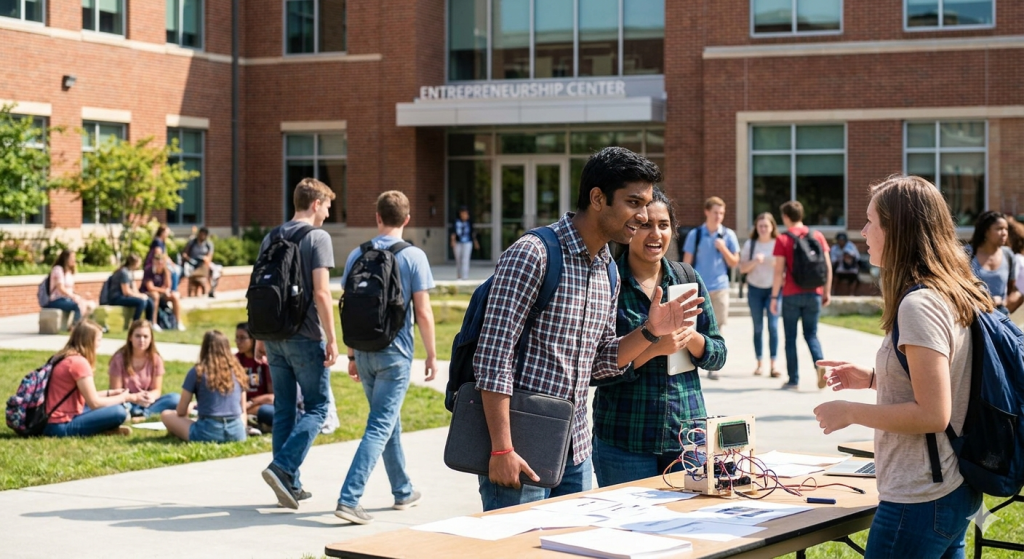
Imagine stepping onto a U.S. college campus, where the air hums with ideas, and every corner—from lecture halls to coffee shops—feels like a launchpad for the next big thing. American universities are more than academic hubs—they’re breeding grounds for entrepreneurship. With incubators nurturing startups, competitions offering seed funding, and networking events connecting dreamers to doers, U.S. campuses are a goldmine for aspiring entrepreneurs. For Indian students with a knack for innovation, these opportunities are a chance to turn bold ideas into reality. Let’s dive into how U.S. universities foster entrepreneurship and share inspiring stories of Indian students who’ve launched ventures from campus, proving that the American dream is alive and thriving.
Why the U.S. is an Entrepreneur’s Playground
The U.S. is synonymous with innovation—think Silicon Valley, where companies like Apple and Google were born, or New York’s bustling startup scene. Universities play a pivotal role, offering resources tailored for entrepreneurial students. From Stanford’s proximity to tech giants to NYU’s urban connections, campuses provide tools like incubators, mentorship, and funding to transform ideas into businesses. For Indian students, who often excel in STEM and business fields, this ecosystem is a perfect fit. The U.S. entrepreneurial culture celebrates risk-taking, collaboration, and creativity—qualities that resonate with India’s growing startup spirit. Whether you’re coding an app or pitching a social enterprise, here’s how U.S. campuses help you soar.
Campus Incubators: Your Startup’s First Home
University incubators are like greenhouses for startups, providing space, mentorship, and resources to nurture fledgling ideas. These programs offer office space, access to industry experts, and sometimes seed funding, helping students turn concepts into viable businesses. Top schools like MIT, Stanford, and UC Berkeley lead the charge, but even smaller universities have robust programs.
MIT’s Martin Trust Center for Entrepreneurship is a standout, offering the Sandbox Innovation Fund, which provides up to $25,000 in grants for student startups. Students also get access to mentors, prototyping labs, and workshops on pitching to investors. Stanford’s StartX, a nonprofit accelerator, supports student and alumni ventures with funding and connections to Silicon Valley investors. NYU’s Entrepreneurial Institute runs the Leslie eLab, a hub where students can brainstorm, prototype, and pitch ideas, with programs like the Startup Sprint offering intensive mentorship.
Real-world example: Consider Rupak, a fictional Indian student inspired by real success stories. Studying computer science at Stanford, Rupak joined StartX to develop an AI-driven app for personalized learning. With $10,000 in seed funding and mentorship from a tech founder, he launched his app, which now serves 5,000 students. The incubator’s network connected him to venture capitalists, securing $100,000 for his startup’s next phase.
How Indian students benefit: Incubators are ideal for Indian students in tech-heavy fields like computer science or engineering. They provide structure for those new to entrepreneurship, helping navigate U.S. business norms like pitching or legal setup. Joining an incubator often requires a strong idea or prototype, so start by attending workshops or hackathons to refine your concept.
Check your university’s entrepreneurship center early—MIT’s Trust Center hosts info sessions for freshmen. Apply for incubators with a clear pitch, emphasizing your idea’s impact. Indian students can leverage their technical skills, like coding or data analysis, to stand out.
Startup Competitions: Where Ideas Win Big
Startup competitions are the ultimate stage for entrepreneurial students, offering cash prizes, feedback, and exposure to investors. These events, hosted by universities or national organizations, let you pitch your idea to judges—often industry leaders or venture capitalists. Winning can mean funding, mentorship, or a ticket to bigger competitions.
The Hult Prize, a global competition open to U.S. students, awards $1 million to the team with the best social impact startup. MIT’s $100K Entrepreneurship Competition is a magnet for tech innovators, offering cash and connections to Boston’s startup scene. Berkeley’s LAUNCH Accelerator provides up to $100,000 for student ventures, with Indian students often excelling in fields like AI or sustainability.
Real-world example: Sukanya, a composite Indian student at NYU, entered the Hult Prize with her idea for a sustainable fashion platform. Her team’s pitch—using blockchain to trace eco-friendly materials—won $50,000, which funded her startup’s prototype. The competition’s visibility led to a partnership with a New York fashion brand, launching her venture.
How Indian students benefit: Competitions reward the hustle and creativity Indian students bring, especially in STEM or social impact fields. They also teach pitching skills, crucial for U.S. business culture. Even if you don’t win, feedback from judges sharpens your idea.
Start with campus competitions, like NYU’s Entrepreneurs Challenge, to build confidence. Practice your pitch with peers or at university pitch workshops. Highlight data—Sukanya’s blockchain pitch included stats on fashion waste—to impress judges. Check deadlines early, often in fall or winter.
Networking Events: Connecting Dreamers to Doers
Networking is the lifeblood of entrepreneurship, and U.S. campuses are buzzing with events that connect students to founders, investors, and peers. Career fairs, startup panels, and alumni meetups offer chances to pitch ideas, find co-founders, or land internships at startups. Cities like Boston (home to MIT) and San Francisco (near Stanford) amplify these opportunities with their startup ecosystems.
Stanford’s Entrepreneurial Thought Leaders Series brings tech founders like Elon Musk to campus, inspiring students and offering Q&A sessions. NYU’s Startup Week includes pitch nights and investor meetups, perfect for urban entrepreneurs. UC Berkeley’s SkyDeck connects students to Bay Area startups for mentorship and internships.
Real-world example: An Indian student, inspired by real stories, attended MIT’s $100K pitch event as a freshman. Networking with a judge led to an internship at a Boston startup, where he learned about venture funding. By his senior year, he co-founded a health-tech startup with a classmate he met at a networking mixer.
How Indian students benefit: Networking can feel daunting for Indian students used to formal systems, but U.S. events are casual and welcoming. These connections often lead to co-founders, mentors, or job offers, especially in tech-heavy fields popular among Indian students.
Attend events early, even as a freshman. Prepare a 30-second elevator pitch about your idea or skills. Use LinkedIn to follow up with contacts—Rupak connected with a StartX mentor this way. Join Indian student associations, like Sangam at MIT, which often host career panels with Indian alumni entrepreneurs.
Challenges for Indian Students
Entrepreneurship in the U.S. isn’t without hurdles for Indian students:
- Visa Restrictions: F-1 visa rules limit off-campus work to Curricular Practical Training (CPT) or Optional Practical Training (OPT). Starting a business during CPT or OPT is possible but requires DSO approval and compliance with visa rules. The H-1B visa, needed for long-term work, is a lottery with a 30-40% selection rate.
- Cultural Adjustment: Pitching ideas or networking can feel unfamiliar compared to India’s structured systems. Indian students may need to adapt to the U.S.’s informal, direct communication style.
- Financial Pressure: Launching a startup costs money, and the Indian rupee’s exchange rate makes U.S. expenses high. Scholarships or on-campus jobs ($12-$20/hour, 20 hours/week max) can help, but funding is critical.
Solutions: Use OPT (up to 36 months for STEM students) to work on your startup legally. Practice pitching at campus workshops to build confidence. Apply for scholarships like the Tata Scholarship at Cornell to ease costs.
Success Stories: Indian Students Making Waves
Indian students have turned U.S. campus resources into thriving ventures. Here are two composite stories based on real successes:
- Rahul, MIT ‘22: Rahul, from Hyderabad, studied computer science and joined MIT’s Sandbox Fund. His idea for an AI-powered mental health app won $15,000 in the $100K Competition. Mentors connected him to Boston investors, and during STEM OPT, he scaled his startup, now serving 10,000 users. His H-1B sponsorship came from a tech firm impressed by his app.
- Ananya, NYU ‘21: Ananya, from Kolkata, pursued an MBA and joined NYU’s Leslie eLab. Her startup, a platform for affordable solar solutions in rural India, won the Entrepreneurs Challenge, securing $25,000. Networking at Startup Week led to a partnership with a clean energy firm. She’s now using OPT to grow her venture while applying for an H-1B.
These stories show how campus resources—incubators, competitions, and networking—turn ideas into reality. Rahul and Ananya leveraged their technical skills and India’s market potential to stand out.
Tips for Aspiring Entrepreneurs
To seize entrepreneurial opportunities in the U.S., start early and stay strategic:
- Join Campus Programs: Enroll in entrepreneurship courses or incubators like Stanford’s StartX. Attend workshops to learn business basics, like legal structures or funding.
- Compete and Pitch: Enter competitions like the Hult Prize or MIT’s $100K. Even if you don’t win, feedback refines your idea. Practice pitches at university centers.
- Network Relentlessly: Attend startup events, alumni panels, and career fairs. Connect with Indian alumni through groups like Sangam or USC’s Indian Students Association for mentorship.
- Leverage OPT: Use OPT (and STEM OPT) to work on your startup or gain experience at a U.S. firm. Ensure your employer is E-Verify compliant for STEM OPT.
- Seek Funding: Apply for campus grants, like Berkeley’s LAUNCH, or external scholarships like Inlaks for Indian students. Crowdfunding or angel investors are also options.
The Payoff: Building a Global Future
U.S. campuses are a springboard for entrepreneurial Indian students. Whether you’re launching an app like Rahul or a social enterprise like Ananya, resources like incubators, competitions, and networking events make it possible. The challenges—visa hurdles, cultural shifts, and costs—are real, but the rewards are transformative: a chance to build a startup, gain global experience, and join the ranks of innovators. From MIT’s labs to NYU’s urban hub, the U.S. offers a stage for your entrepreneurial dreams. Seize it, pitch it, and build it—your startup journey starts now.