Unlocking Work in the USA
Posted on : 14 April, 2026 8:10 pm
A Guide to CPT, OPT, and Internships for Indian Students
Studying in the United States is like stepping onto a global stage—world-class education, vibrant campus life, and a shot at building a career that spans continents. For Indian students, who make up over 330,000 of the 1.1 million international students in the U.S., according to the Institute of International Education, the dream often includes gaining practical work experience. But with F-1 visa restrictions, navigating job opportunities can feel like solving a puzzle. The good news? Programs like Curricular Practical Training (CPT), Optional Practical Training (OPT), and on-campus jobs, along with internships and STEM OPT extensions, open doors to valuable experience. Let’s dive into these work options, break down the rules, and share tips to help Indian students maximize their career potential in the U.S.
Why Work Experience Matters
Work experience during or after your U.S. degree isn’t just about earning extra cash—it’s a launchpad for your career. Internships and practical training help you apply classroom knowledge, build professional networks, and boost your resume for global employers. For Indian students, whose top fields include computer science, engineering, and business, these opportunities are especially critical in competitive industries like tech and finance. Plus, with the Indian rupee’s exchange rate making U.S. education costly, part-time work can ease financial pressure. Let’s explore the main avenues: CPT, OPT, on-campus jobs, and internships, with a special focus on STEM OPT for Indian students.
Curricular Practical Training (CPT): Learning by Doing
Curricular Practical Training (CPT) lets F-1 visa holders work off-campus in a job directly related to their major, as part of their academic program. Think of it as a bridge between your studies and the real world—whether it’s coding for a tech startup or analyzing data for a finance firm. CPT is typically used for internships, co-ops, or practicums required by your degree.
How it works: You need to be enrolled full-time for at least one academic year (nine months) before starting CPT, though some graduate programs allow earlier participation if work is a degree requirement. Jobs must align with your major—for example, a computer science student might intern at a company like Google, while a business major could work at a consulting firm. CPT can be part-time (20 hours or less per week) during the school year or full-time during breaks. Authorization comes from your university’s Designated School Official (DSO) and requires enrollment in a related course or credit.
Eligibility for Indian students: Indian students, especially in STEM fields, benefit from CPT’s flexibility. For instance, a master’s student in data science at NYU might use CPT for a summer internship at a Wall Street firm. However, using CPT for more than 12 months full-time can disqualify you from OPT, so plan carefully.
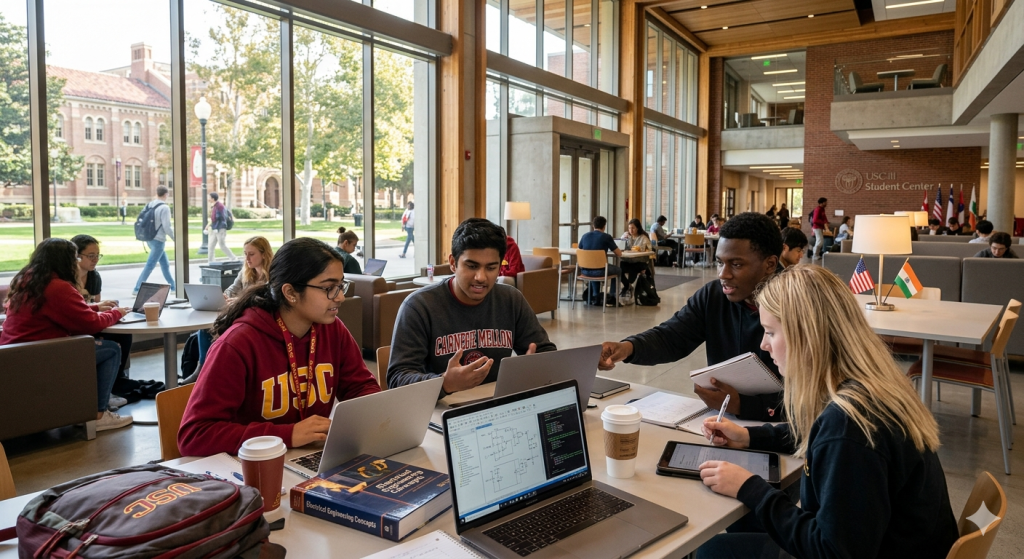
Real-world example: Consider Akansha, a fictional student from Mumbai inspired by real stories. She pursued a master’s in electrical engineering at USC and landed a CPT internship at Intel during her second semester. The internship, tied to a course on circuit design, gave her hands-on experience and a foot in the door for future roles. She worked 15 hours a week during the semester, earning $25/hour, which helped cover living costs in Los Angeles.
Tips for success: Meet with your DSO early to confirm eligibility and course requirements. Search for CPT-eligible internships on platforms like Handshake or LinkedIn, focusing on roles that match your major. Tailor your resume to highlight relevant skills, like Python for a tech internship. Be mindful of the 12-month CPT limit if you plan to use OPT later.
Optional Practical Training (OPT): Your Post-Graduation Launchpad
Optional Practical Training (OPT) is the golden ticket for F-1 students, allowing work in your field of study for up to 12 months after completing your degree. Unlike CPT, OPT doesn’t require enrollment in a course—it’s a chance to gain professional experience post-graduation, whether at a startup, a Fortune 500 company, or a research lab.
How it works: You apply for OPT through your DSO, who recommends it to U.S. Citizenship and Immigration Services (USCIS). Once approved, you receive an Employment Authorization Document (EAD), allowing you to work anywhere in the U.S. for up to 12 months. Jobs must relate to your major—think software engineering for a computer science graduate or marketing for a business major. You can use OPT before graduation (pre-completion) or after (post-completion), but most choose post-completion to maximize career opportunities.
STEM OPT extension for Indian students: Indian students in STEM fields (science, technology, engineering, math) hit the jackpot with the STEM OPT extension, which adds 24 months to the standard 12-month OPT period, totaling 36 months. Popular STEM majors like computer science, engineering, and data science qualify, covering over 70% of Indian students in the U.S. To qualify, you need a job with an E-Verify employer (many tech giants like Microsoft qualify) and a training plan approved by your DSO. This extension is a game-changer, giving you three years to gain experience, network, and potentially secure an H-1B visa.
Real-world example: Deepak, a composite student from Bangalore, completed a master’s in computer science at Carnegie Mellon. After graduation, he used his 12-month OPT to work as a software engineer at a Pittsburgh startup, earning $80,000 annually. His STEM OPT extension let him stay two more years, during which he transitioned to a role at Amazon, boosting his resume and H-1B chances.
Tips for success: Apply for OPT 90 days before graduation to avoid delays—processing can take 3-5 months. Use career fairs and university job boards to find E-Verify employers for STEM OPT. Build a strong LinkedIn profile to attract recruiters. For STEM OPT, ensure your employer submits the Form I-983 training plan. Deepak networked at CMU’s career fair, landing his first OPT role through a connection.
On-Campus Jobs: Earning While Learning
On-campus jobs are the simplest way for F-1 students to earn money, as they don’t require special authorization beyond your visa. These jobs—think library assistant, lab technician, or dining hall worker—are limited to 20 hours per week during the academic year and can be full-time during breaks.
How it works: Pay typically ranges from $12-$20/hour, depending on the role and location. Universities like MIT or UCLA offer diverse options, from research assistantships to student center staff. No additional paperwork is needed, but jobs are competitive, so apply early through your university’s job portal.
Eligibility for Indian students: All F-1 students can work on-campus from day one, making this ideal for freshmen or those ineligible for CPT. Roles like research assistants are especially valuable for STEM students, offering both income and relevant experience.
Real-world example: Kanchan, our USC student, worked 15 hours a week as a lab assistant, earning $15/hour. The $900 monthly income covered her groceries and phone bill, easing her budget in pricey Los Angeles. The role also strengthened her resume for her CPT internship.
Tips for success: Check your university’s job board in August or September, as openings fill fast. Prioritize roles related to your major, like tutoring for math students or lab work for engineers. Build relationships with supervisors—they can write strong recommendation letters.
Internships: Building Your Career Bridge
Internships, whether through CPT or standalone, are critical for gaining industry experience and networking. Many U.S. companies, especially in tech (Google, Apple) and finance (Goldman Sachs), recruit international students for summer internships, paying $20-$50/hour. These roles often lead to full-time offers, especially during OPT or STEM OPT.
How it works: Internships can be part-time or full-time, on-campus or off-campus, and may use CPT if they’re part of your curriculum. Universities like Stanford and NYU host career fairs connecting students to top employers. Off-campus internships require CPT authorization, while on-campus ones don’t.
Eligibility for Indian students: Indian students in fields like computer science or engineering are in high demand for tech internships. Visa restrictions limit off-campus work without CPT, but on-campus internships (e.g., at university research labs) are accessible immediately.
Tips for success: Use Handshake, LinkedIn, or Indeed to find internships. Attend career fairs and prepare a polished resume highlighting projects or skills like Python or data analysis. Practice interview skills through your university’s career center. Priya landed her Intel internship by networking at a USC job fair, leveraging her lab assistant experience.
Challenges and Tips for Indian Students
Navigating U.S. work options comes with hurdles. F-1 visa rules restrict off-campus work without CPT or OPT, and on-campus jobs are limited. The H-1B visa lottery, needed for long-term U.S. employment, is competitive, but STEM OPT improves your odds. Currency exchange rates can also make earnings feel small when sending money home.
Practical tips:
- Plan Ahead: Meet your DSO in your first semester to map out CPT and OPT eligibility. Avoid overusing full-time CPT to preserve OPT.
- Network Early: Attend career fairs, join student organizations, and connect with alumni on LinkedIn. Deepak’s Amazon role came through a CMU alumnus.
- Maximize STEM OPT: If you’re in STEM, target E-Verify employers early. Check USCIS’s E-Verify list to confirm eligibility.
- Budget Wisely: Use on-campus job earnings for small expenses like food or transit. Save internship income for tuition or emergencies.
- Seek Guidance: Use resources like EducationUSA or your university’s international student office for visa and job advice.
Building a Global Career
Work opportunities like CPT, OPT, and internships are more than paychecks—they’re stepping stones to a global career. A summer internship at a tech giant can lead to an OPT role, which might secure an H-1B visa or a job back in India with a multinational. For Indian students, STEM OPT is a game-changer, offering three years to gain experience and credibility. Kanchan’s Intel internship led to a full-time offer, while Deepak’s STEM OPT paved the way for a career at Amazon.
Studying in the U.S. is an investment, and work experience maximizes the return. Whether you’re coding in Silicon Valley, analyzing data in New York, or researching at a university lab, these opportunities let you shine. Start early, plan smart, and seize every chance to build your future—one job at a time.