U.S. Student Visas
Posted on : 14 April, 2026 4:19 pm
For international students dreaming of studying in the United States, securing the right visa is a critical step. The U.S. offers two primary student visas: the F-1 visa for academic studies and the J-1 visa for exchange programs. These visas open doors to world-class education at institutions like Harvard, MIT, or UCLA, but navigating the application process can be daunting, especially for Indian students. This guide provides a detailed overview of the F-1 and J-1 visas, including eligibility, application steps, the DS-160 form, visa interviews, and practical tips for Indian students dealing with U.S. embassies.
Understanding the F-1 Visa
The F-1 visa is the most common choice for international students pursuing full-time academic programs in the USA, such as undergraduate, graduate, or doctoral degrees. It’s designed for students attending accredited institutions, including universities, colleges, high schools, or language programs. In 2023, over 600,000 F-1 visas were issued, with Indian students making up a significant portion, particularly in STEM fields, according to U.S. Department of State data.
Eligibility for the F-1 Visa
To qualify for an F-1 visa, Indian students must meet specific criteria:
- Acceptance at a SEVP-Approved School: You need an admission offer from a Student and Exchange Visitor Program (SEVP)-certified institution, which issues the Form I-20, a key document for the visa application.
- Full-Time Enrollment: The program must require full-time study, typically 12+ credits per semester for undergraduates or 9+ for graduate students.
- Financial Proof: Applicants must demonstrate sufficient funds to cover tuition and living expenses, often through bank statements, affidavits of support, or scholarship letters.
- Intent to Return: You must prove strong ties to India, showing you intend to return after your studies, such as family connections or job prospects.
- English Proficiency: While not explicitly required for the visa, proficiency (proven via TOEFL or IELTS) strengthens your application.
F-1 Visa Application Process
The F-1 visa process involves several steps, requiring careful preparation:
- Receive Form I-20: After acceptance, your U.S. institution issues the I-20 form, detailing your program, duration, and estimated costs.
- Pay the SEVIS Fee: Before applying, pay the $350 SEVIS (Student and Exchange Visitor Information System) fee online at fmjfee.com. Keep the receipt.
- Complete the DS-160 Form: Fill out the online DS-160 non-immigrant visa application at ceac.state.gov. This form asks for personal details, travel history, and program information. Save the confirmation barcode.
- Schedule a Visa Interview: Book an appointment at the U.S. Embassy or Consulate in India (e.g., New Delhi, Mumbai, Chennai, Hyderabad, or Kolkata) via ustraveldocs.com. Expect wait times, especially during peak seasons (May–August).
- Pay the Visa Fee: The non-refundable visa application fee is $185, payable online or at designated banks.
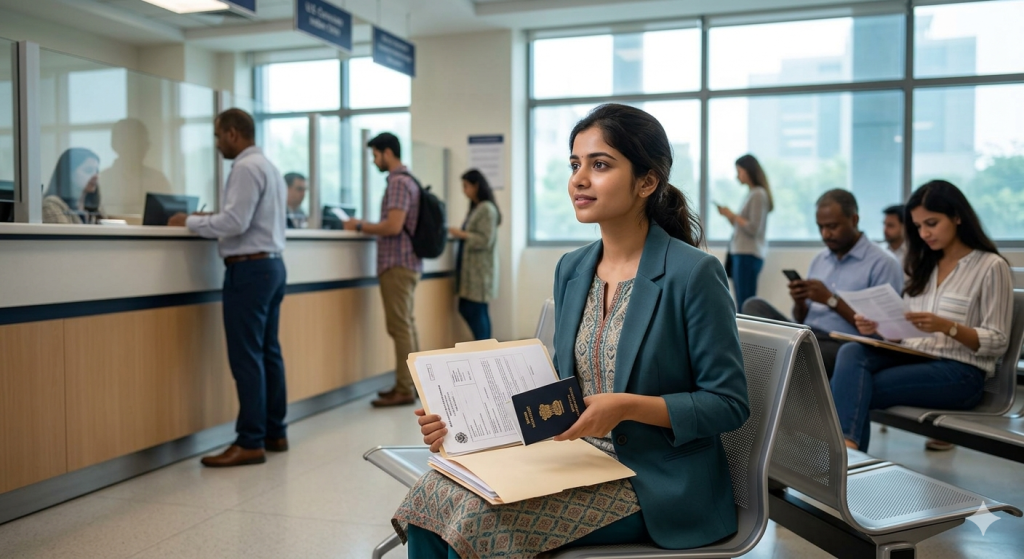
- Attend the Visa Interview: Appear at the embassy with required documents (listed below). The consular officer will assess your eligibility and intent.
- Visa Approval and Issuance: If approved, your passport will be returned with the visa stamp within 5–10 business days.
Documents for the F-1 Visa Interview
Prepare these documents for your interview:
- Valid passport (valid for at least six months beyond your U.S. entry date).
- DS-160 confirmation page with barcode.
- SEVIS fee receipt.
- Form I-20 from your school.
- Visa application fee receipt.
- Financial documents (e.g., bank statements, loan approvals, or sponsor letters).
- Academic records (transcripts, degrees, test scores like SAT, GRE, or TOEFL).
- Proof of ties to India (e.g., property documents, family details, or a future job offer).
Understanding the J-1 Visa
The J-1 visa is for exchange visitors participating in programs promoting cultural exchange, such as study abroad, research, or internships. It’s ideal for short-term programs, like semester exchanges, summer courses, or au pair opportunities. Indian students often use J-1 visas for programs sponsored by universities, governments, or organizations like Fulbright.
Eligibility for the J-1 Visa
J-1 visa requirements vary by program but generally include:
- Program Sponsorship: You must be accepted into a J-1-approved exchange program, which issues the DS-2019 form.
- Program Duration: J-1 programs range from weeks to years, depending on the category (e.g., student, scholar, or intern).
- Financial Support: Similar to the F-1, you must prove funding for your stay, often through program sponsors or personal funds.
- Two-Year Home-Country Requirement: Some J-1 visa holders must return to India for two years after their program, especially if funded by government sources.
- Intent to Return: Like the F-1, you must show ties to India.
J-1 Visa Application Process
The J-1 process mirrors the F-1 but has unique elements:
- Receive Form DS-2019: Your program sponsor (e.g., a university or organization) provides the DS-2019 form, outlining program details.
- Pay the SEVIS Fee: The $220 SEVIS fee (lower for some programs) is required before applying.
- Complete the DS-160 Form: Submit the online DS-160 form, as with the F-1 process.
- Schedule and Pay for the Interview: Book an appointment and pay the $185 visa fee.
- Attend the Visa Interview: Bring required documents to the embassy or consulate.
- Visa Issuance: If approved, expect your visa within 5–10 business days.
Documents for the J-1 Visa Interview
Required documents include:
- Valid passport.
- DS-160 confirmation page.
- SEVIS fee receipt.
- Form DS-2019 from your sponsor.
- Visa application fee receipt.
- Financial proof (e.g., sponsor letters or bank statements).
- Program acceptance letter and academic records.
- Proof of ties to India.
The DS-160 Form: A Critical Step
The DS-160 form is central to both F-1 and J-1 applications. This online form collects personal, educational, and travel information. Tips for Indian students:
- Be Accurate: Double-check details like passport numbers and program dates. Errors can lead to delays or denials.
- Upload a Photo: Use a recent, high-quality photo meeting U.S. specifications (2×2 inches, white background).
- Save Progress: The form can take time, so save your application ID to resume later.
- Prepare for Questions: Expect queries about your study plans, funding, and intent to return to India.
Navigating the Visa Interview
The visa interview at a U.S. Embassy or Consulate is pivotal. Consular officers assess your eligibility, intent to return, and program suitability. Tips for Indian students:
- Be Confident and Concise: Answer questions clearly, focusing on your study goals and ties to India (e.g., family, career plans).
- Practice Common Questions: Prepare for queries like “Why this university?” or “How will you fund your studies?”
- Dress Professionally: Business casual attire shows seriousness.
- Bring Organized Documents: Use a folder to present papers efficiently.
- Address Ties to India: Highlight reasons to return, like family businesses or job prospects in India’s growing economy.
Tips for Indian Students Navigating U.S. Embassies
Indian students face unique challenges due to high application volumes and long wait times at U.S. embassies. Here’s how to succeed:
- Apply Early: Schedule interviews 3–6 months before your program starts, as slots in cities like New Delhi or Mumbai fill quickly.
- Choose the Right Consulate: Select a consulate with shorter wait times (e.g., Chennai or Hyderabad may be faster than Delhi).
- Prepare Financial Proof: Indian students often face scrutiny over funding. Provide clear, recent bank statements or sponsor letters covering at least one year’s expenses.
- Leverage University Support: Many U.S. institutions offer visa guidance or mock interviews for admitted students.
- Avoid Peak Seasons: May–August sees high demand; apply in quieter months like February if possible.
Key Differences Between F-1 and J-1 Visas
- Purpose: F-1 is for full-time academic programs; J-1 is for exchange programs with a cultural focus.
- Duration: F-1 lasts the duration of your program; J-1 varies by program, often shorter.
- Work Opportunities: F-1 allows CPT and OPT; J-1 permits limited work, like academic training, with sponsor approval.
- Home-Country Requirement: J-1 may require two years in India post-program; F-1 does not.
- Funding: F-1 requires personal or family funds; J-1 often involves program sponsorship.
Overcoming Common Challenges
Indian students may face visa delays, denials, or financial scrutiny. To mitigate:
- Plan Ahead: Start the process early to account for delays.
- Strengthen Your Case: Show clear ties to India, like family or career plans, to avoid intent-to-stay concerns.
- Seek Expert Advice: Consult university international offices or visa consultants for guidance.
- Handle Denials: If denied, address consular concerns (e.g., weak financial proof) and reapply.
Your Path to a U.S. Student Visa
Securing an F-1 or J-1 visa is a gateway to studying in the USA, offering access to top-tier education and global opportunities. By understanding eligibility, mastering the DS-160, preparing for interviews, and planning early, Indian students can navigate the process with confidence. Start your journey today and unlock a transformative academic experience.